
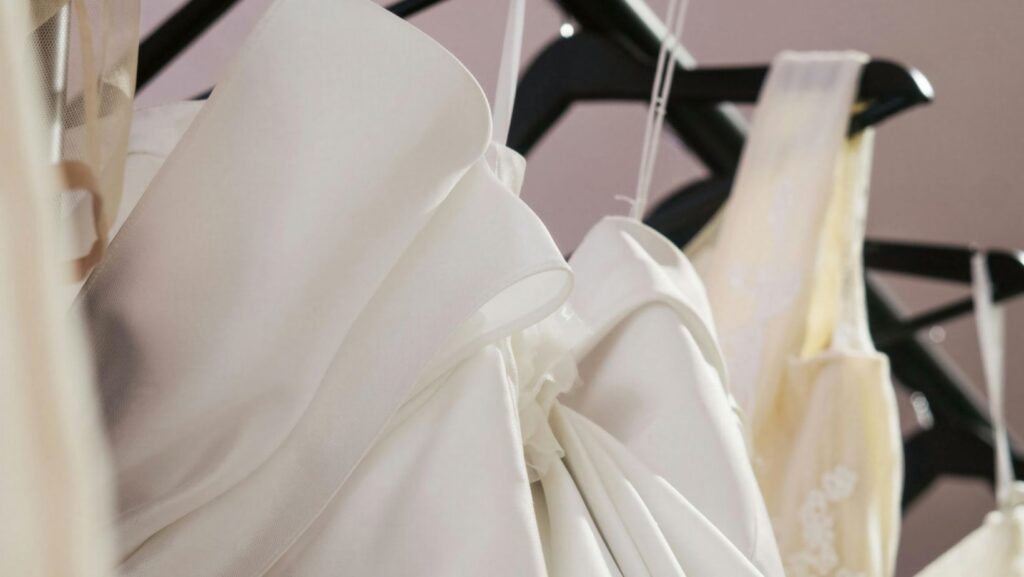
Two brides pick the same A-line pattern. One dress looks sleek and modern in photos. The other looks soft and romantic. The cut is identical. The difference is fabric.
This happens constantly. The wedding gown fabric determines how light hits it, how it moves, and how it feels six hours into the reception. This guide explains what actually changes and how to choose without guessing.
What Fabric Changes in a Wedding Dress
Light behaves differently on different fabrics. Satin reflects it. Creates shine. Reads as formal and polished in every photo. Crepe absorbs light. Looks matte. Photographs subtle and quiet. Same silhouette. Completely different dress in the image.
Movement is not optional. Chiffon floats. Catches air. Moves even when you stand still. Mikado holds whatever shape you give it. Barely moves at all. The skirt that flows in one fabric sits rigid in another. This matters when you walk down the aisle, when you dance, when the wind hits the dress.
Fabric determines how the dress fits your body. Structured fabrics smooth everything. Hold you in place. Soft fabrics show your actual shape. If you want correction or support, fabric choice is half the work. If you want ease and comfort, you need a different fabric entirely.
Comfort changes after hours of wear. Heavy satin traps heat. You feel it by hour three. Lightweight crepe breathes. Some fabrics cling with static electricity. Others slide over a slip without friction. Eight hours later, comfort is what you remember. Not how it looked.
What to notice when you try it on:
- Does light bounce off it or sink in
- What happens when you turn or walk quickly
- Does it smooth your silhouette or follow every curve
- Can you already feel wrinkles forming when you sit
- Is it trapping heat or letting air through
- Does it stick to you or stand away
Mini-case:
A bride wanted a column dress. Simple. No fuss. I showed her the same pattern in crepe and duchess satin. Crepe draped close to her body. Moved softly. Satin stood away from her hips and created a smoother line. She picked satin because she wanted that structure. Same pattern. Totally different results on her body.
Fabric Families: Soft vs Structured
Soft fabrics move with you. Crepe falls in folds without fighting back. It barely wrinkles even after hours of sitting. Chiffon needs multiple layers because it is sheer,r but it catches air beautifully when you walk. Charmeuse slides over your body with subtle shine.
These work well for outdoor weddings or relaxed venues. They photograph softly. They let you move naturally. But they show your actual body shape. No hiding. You need good undergarments, or every line shows. Chiffon snags on rings and bracelets. Charmeuse marks instantly if water touches it.
Structured fabrics do not drape. They hold whatever shape you give them. Mikado is smooth with just enough sheen to catch light without looking shiny. It does not wrinkle. Ever. I have never seen Mikado wrinkle badly. Taffeta has more texture and sounds crisp when you move. Duchess satin is heavy and formal and stands away from your body.
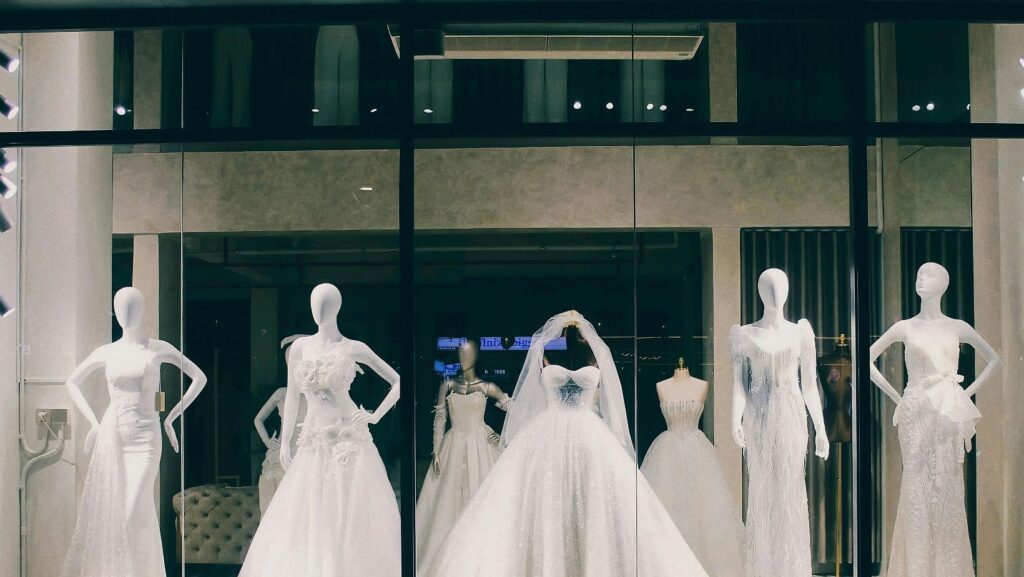
The problems show up after wearing them for hours. Stiff fabrics feel restrictive. Heavy satin pulls on your shoulders. Taffeta wrinkles terribly if you sit for a long ceremony. The dress looks perfect in photos, but wearing it is exhausting.
Sheer fabrics add volume and layers. Tulle makes skirts float. Organza is stiffer and holds shapes like puffed sleeves or structured skirts. Both go over something else. Nobody wears just tulle.
Cheap tulle is the worst. It scratches. It feels like plastic netting. Good tulle is soft but costs more. Organza catches on to everything rough. Jewelry. Chairs. Door handles.
If you want to see examples of bridal fabrics and understand the visual difference between textures, you can look at https://beglarianfabrics.com/collections/bridal as a reference guide.
Quick match: fabric to silhouette:
- Column or slip dress → crepe, charmeuse, silk,k satin
- A-line with structure → mikado, duchess satin
- Ballgown → mikado bodice, tulle or organza skirt
- Bohemian or beach → chiffon, lightweight crepe
- Minimalist modern → heavy crepe, matte mikado
Mini-case:
A bride wanted pure minimalism. Clean lines. No decoration. I thought duchess satin would work because it holds shape and photographs well. She tried it on. Too shiny. The light bounceeverywherehe, re and it looked generic bridal catalog. We switched to heavyweight matte crepe. Same, cu,t, but the fabric made it look editorial instead of traditional.
Budget, Season, and Comfort: The Trade-Offs People Miss
Season dictates fabric more than most people realiA summermmer outdoor wedding in heavy satin is torture. The fabric does not breathe. You sweat through it. It clings to your legs. Lightweight crepe or silk organza makes more sense. Winter can handle heavier fabrics. Mikado and duchess satin feel right and provide some warmth.
Budget is not about expensive versus cheap. It is about what looks good at each price level. All satin is not the same. Cheap satin has a harsh shine and photographs like plastic. Good satin has subtle luster. The difference isin fiber content and weight. Polyester satin costs less but looks artificial in photos. Silk satin costs more but reads refined.
You can find beautiful dresses at any budget. The trick is picking fabric that works at that price. Crepe looks expensive even when it is not. Simple Mikado reads high-end. Cheap chiffon screams cheap instantly.
Comfort problems show up hours into the wedding. Lining matters more than you think. No lining means the dress sticks to your skin when you move. Satin generates static. Tulle scratches if it touches bare skin. The dress has to slide on without fighting you.
Durability for one long day is real. You sit. Walk. Dance. Hug people. Brush against tables. Delicate fabrics snag on everything. Soft satins mark if liquid touches them. Crepe bounces back from wrinkles. Taffeta does not.
Questions to ask:
- What time of year and what temperature
- Indoors with AC or outside in the sun
- How many hours will you actually wear this
- What happens when you sit for 30 minutes
- Do you want structure or flow
- What if someone spills water on it
Mini-case:
Summer wedding dress in silk charmeuse. Looked perfect at the fitting. The wedding was outside in July. 85 degrees. Two hours in, the fabric stuck to her legs. She looked miserable. The photos came out great, but she hated wearing it. Should have beena lightweight crepe or organza that allows air to move.
Choosing Fabric Like a Designer: A Simple Decision Checklist
Start with sa ilhouette. Fitted shapes need fabric with body. Mikado. Duchess satin. Heavyweight crepe. Flowing shapes need soft fabric. Chiffon. Lightweight crepe. Charmeuse. The cut tells you immediately whether you need structure or drape.
Decide on the visual effect. Matte or shine. Matte reads modern. Understated. Shine reads traditional and formal. This changes how you look in photos. Matte stays consistent under any light. Shiny fabric changes completely depending on the light source.
Test movement if you can. Walk in the fabric sample. Does it move with you or resist? Does it flow when you turn? Does it wrinkle when you sit and then smooth out when you stand? This predicts how it behaves during the actual wedding.
Take photos of the fabric. Different lighting. Natural light. Indoor light. Flash. Some fabrics look beautiful in person but photograph strangely. Satin can blow out in flash photos. Very matte fabrics sometimes look flat and dull in images.
Think about alterations. Crepe and Mikado take changes easily. Lace is a nightmare to alter. Heavily beaded fabric is worse. If you might need adjustments later, pick something forgiving.
Consider what goes under it. Structured fabrics hide more. Soft fabrics show bra lines, underwear seams, everything. You need the right slip and shapewear, or the whole thing fails.
Final checklist:
- Does this work for my venue, season, and temperature
- Does it create structure or drape based on what I want
- How does it photograph under my actual lighting
- Can I move, sit, dance without fighting the fabric
- Will it wrinkle or hold up through a full day
- What undergarments does it require
- Does it look goodwithint my budget, or does it read cheap
- Can it be altered if I need changes
Three wedding scenarios:
City hall, 30 minutes, modern look: Heavyweight crepe in a slip silhouette. Photographs beautifully. Does not wrinkle. Looks expensive. You can move freely.
Beach, outdoor, afternoon: Lightweight silk crepe or silk organza. Has to handle wind and heat. Nothing too structured or it looks wrong. Nothing too soft or sweat shows through.
Formal evening, ballroom: Mikado bodice with silk tulle skirt. Handles the formality. Photographs with clean definition. Holds shape through a long reception. Tulle adds volume without weight.