
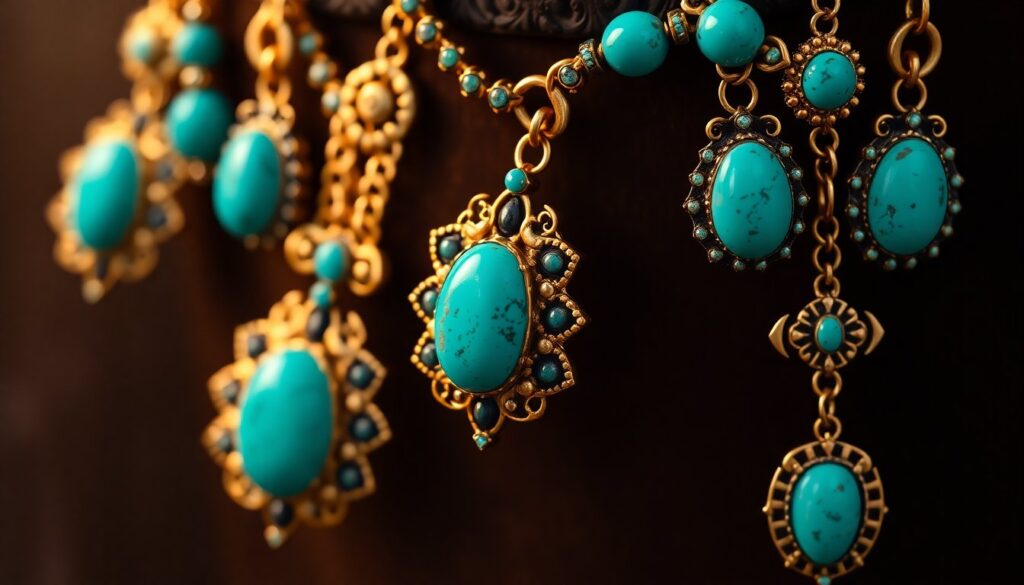
Plicabig gold turquoise jewelry buying guide history appears in this guide to help buyers. It explains origins, value, authentication, and buying tips. It presents clear steps to check pieces. It shows what to ask sellers. It helps readers pick the right piece with confidence.
Key Takeaways
- Plicabig gold turquoise jewelry is known for bold shapes, simple bezels, and 14k or 18k warm yellow gold, blending mid-century revival with modern minimalism.
- Buyers should verify gold purity marks (14k, 18k, 750) and authentic Plicabig hallmarks to ensure genuine craftsmanship and materials.
- Inspect turquoise for natural matrix, avoid overly uniform stones that indicate stabilization or treatment, and request gem reports when possible.
- Compare market prices carefully, considering stone size, gold karat, and condition to understand value and resale potential.
- Choose Plicabig pieces that fit well and complement personal style, balancing stone size and gold weight for comfort and wearability.
- Purchase from reputable dealers with clear provenance, ask detailed questions about gold karat, treatments, and return policies to avoid counterfeit or low-quality items.
What Is Plicabig? Origins, Brand Identity, And Signature Styles
Plicabig started as a small studio that mixed classic gold work with bright turquoise. The brand focused on bold shapes and clean settings. The company used local lapidaries and goldsmiths. Collectors linked Plicabig to mid-century revival designs and modern minimalism. The brand kept a consistent mark that often included a stamped logo inside bands. Plicabig pieces use large turquoise cabochons, simple bezels, and wide bands. They favor 14k and 18k gold in warm yellow tones. Shoppers use the brand name to find similar designs and to compare quality across sellers.
A Brief History Of Gold And Turquoise In Jewelry (And Where Plicabig Fits)
Gold and turquoise have paired in jewelry for millennia. Ancient makers set turquoise in gold for contrast and color. In the 19th and 20th centuries, Western and Native American traditions popularized turquoise in rings and necklaces. Designers in the mid-20th century reintroduced large, simple settings that highlighted stones. Plicabig built on these trends by combining modern metalwork with prominent turquoise. The brand sat between heritage craft and contemporary design. Collectors now view Plicabig as part of a lineage that values visible stones, clear metal lines, and wearable scale.
Materials, Hallmarks, And Craftsmanship To Look For
Buyers should inspect gold purity marks and turquoise treatment notes. Look for 14k, 18k, or 750 stamps on gold. Check for a maker’s mark that matches known Plicabig stamps. Examine solder joints and bezel edges for even work. Genuine turquoise shows natural matrix and small inclusions. Stabilized turquoise will appear more uniform and may carry a treatment note. Solid gold settings feel heavier than plated items. Craftsmanship includes tight prongs, smooth bezels, and consistent polish. Photographs should show hallmarks clearly. Ask sellers for magnified images if needed.
Authenticity Checks: How To Verify Gold, Turquoise, And Plicabig Pieces
Test gold with acid or an electronic tester to confirm karat. Verify hallmarks under 10x loupe for maker’s marks and karat stamps. Check weight against similar-size pieces to detect plating. For turquoise, request a gem report when available. Use a loupe to inspect matrix patterns and surface texture. Watch for dye or a waxy surface that signals stabilization or treatment. Compare the piece to documented Plicabig examples in catalogs or museum records. Ask for provenance, original receipts, or prior appraisal notes. If in doubt, send the piece to an independent lab for testing.
Price, Value, And Resale Considerations
Research market prices for similar Plicabig gold turquoise jewelry buying guide history items before buying. Note that larger turquoise stones and higher karat gold raise prices. Condition and original packaging affect resale value. Market demand for turquoise varies by trend cycles and geography. Get a written appraisal for insurance and resale planning. Expect a dealer margin on retail purchases and lower margins at estate sales. Keep all paperwork and service records to preserve value. When selling, present clear photographs, hallmarks, and any provenance to attract buyers.
How To Choose The Right Plicabig Piece: Fit, Scale, And Personal Style
Measure finger size and compare ring band width to finger proportions. Try on wide bands to ensure comfort and proper fit. Consider necklace length and pendant scale with clothing. Choose turquoise color that complements skin tone and wardrobe. Pick simpler settings for daily wear and bolder pieces for events. Balance stone size with gold weight so the piece feels comfortable. Think about how often the piece will wear and what outfits pair well. If the buyer prefers low maintenance, select smaller cabochons and closed-back settings that protect stone edges.
Where To Buy, What To Avoid, And Questions To Ask Sellers
Buy from authorized dealers, reputable vintage shops, or trusted marketplaces. Verify seller ratings and request clear images of hallmarks. Avoid pieces with unclear marks, uneven soldering, or obvious plating. Ask sellers these questions: What is the gold karat? Has the turquoise been treated? Do you have provenance or receipts? Can you provide a return policy and written authentication? Request a detailed condition report that notes scratches, repairs, or replaced stones. For online buys, use escrow or a buyer protection service and inspect the piece promptly when it arrives.