
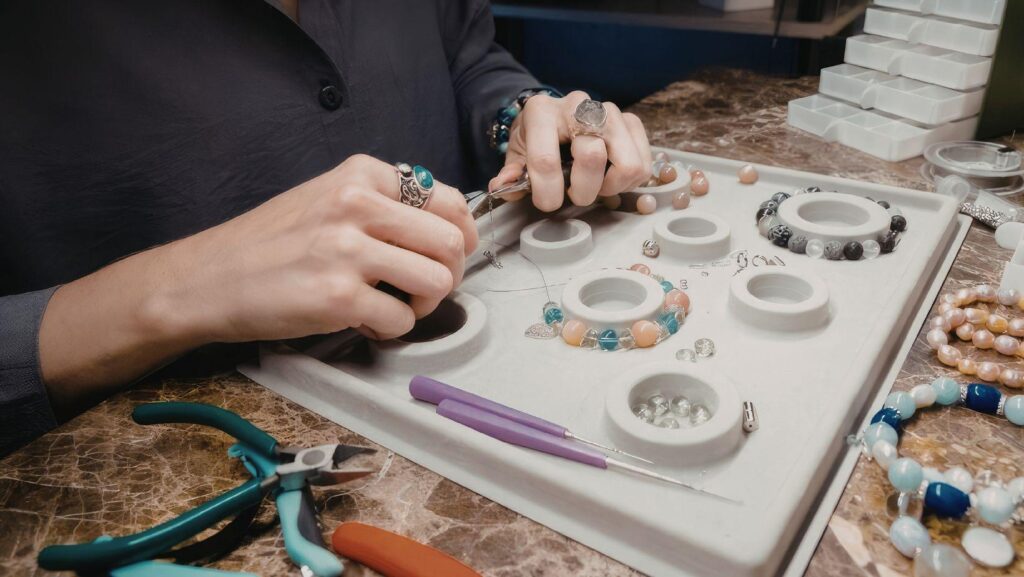
A Shift in What People Value
Luxury used to be defined by logos, exclusivity, and price tags. But today, the definition is changing. Modern consumers are becoming more thoughtful about what they buy and why they buy it.
Instead of focusing only on status, people are now looking for:
- authenticity
- craftsmanship
- meaning behind products
This shift is one of the main reasons handmade jewelry is gaining popularity again.
The Difference Between Handmade and Mass-Produced Jewelry
At a glance, many jewelry pieces may look similar. But the process behind them is very different.
Mass-produced jewelry is created for efficiency. The focus is on producing large quantities quickly and at a lower cost.
Handmade jewelry, on the other hand, is created with attention to detail and individual care. Each piece involves:
- manual craftsmanship
- careful finishing
- more time invested in production
This difference is not always immediately visible, but it becomes clear over time through durability, comfort, and uniqueness.
Why Craftsmanship Matters
Craftsmanship is not just about skill—it’s about intention.
When a piece is made by hand, every detail is considered:
- how it feels when worn
- how it sits on the skin
- how it ages over time
This level of attention creates a different experience for the wearer.
Jewelry becomes more than just something you wear—it becomes something you connect with.
The Rise of Conscious Consumerism
One of the biggest drivers behind the growth of handmade jewelry is conscious consumerism.
People are increasingly aware of:
- how products are made
- where materials come from
- the impact of their purchases
As a result, they are choosing quality over quantity.
Instead of buying multiple trend-driven items, they prefer fewer pieces that last longer and carry more meaning.
Brands associated with craftsmanship, such as john hardy, reflect this shift by focusing on design integrity and long-term value.
Jewelry That Feels Personal
Handmade jewelry often feels more personal than mass-produced pieces.
This is because:
- no two pieces are exactly identical
- design elements reflect artistic intention
- the process behind the piece adds value
For many people, this individuality is more important than perfection.
It allows them to wear something that feels unique to them.
The Beauty of Imperfection
In a world where everything is optimized for uniformity, imperfection is becoming more appreciated.
Handmade jewelry may include:
- slight variations in texture
- subtle differences in shape
- unique finishing details
These elements are not flaws—they are part of the character of the piece.
They show that the item was made by a person, not a machine.
Durability and Longevity
Another advantage of handmade jewelry is durability.
Because more time and care are invested in each piece:
- materials are often higher quality
- construction is more precise
- finishing is more refined
This leads to jewelry that lasts longer and maintains its appearance over time.
Instead of replacing items frequently, you can rely on a few well-made pieces.
Everyday Wear Meets Craftsmanship
Modern lifestyles require jewelry that can adapt.
People want pieces that are:
- comfortable enough for daily wear
- versatile across different outfits
- durable enough for regular use
Handmade jewelry meets these needs by combining practicality with design.
It doesn’t need to be reserved for special occasions—it can be part of everyday life.
Emotional Connection to What You Wear
One of the most powerful aspects of handmade jewelry is the emotional connection it creates.
Knowing that a piece was crafted with care adds a sense of value that goes beyond materials.
It can represent:
- a personal milestone
- a meaningful gift
- a reflection of individual style
Over time, these pieces often become part of personal stories.
Moving Away From Fast Fashion
The fashion industry is shifting away from fast, disposable trends.
Consumers are recognizing the downsides of:
- low-quality materials
- short product lifecycles
- constant consumption
Handmade jewelry offers an alternative.
It encourages:
- slower purchasing decisions
- long-term thinking
- appreciation for craftsmanship
This aligns with broader changes in how people approach fashion and lifestyle.
The Role of Heritage and Tradition
Many handmade jewelry brands draw inspiration from traditional techniques.
These methods have been refined over generations and often include:
- hand-weaving
- metal shaping
- detailed engraving
This connection to heritage adds depth and authenticity to each piece.
It also helps preserve craftsmanship that might otherwise disappear.
Why This Trend Will Continue
The shift toward handmade jewelry is not temporary.
It is driven by long-term changes in consumer behavior:
- increased awareness
- preference for quality
- desire for authenticity
As these values continue to grow, handmade jewelry will remain relevant.
How to Choose the Right Piece
When selecting handmade jewelry, it’s important to focus on:
- craftsmanship quality
- material durability
- design versatility
- personal connection
The best piece is not necessarily the most expensive—it’s the one that fits your lifestyle and feels meaningful.
Final Thoughts
Handmade jewelry represents a new direction in modern luxury.
It combines:
- craftsmanship
- individuality
- long-term value
In a world filled with mass production, this approach offers something different—something more human.
By choosing pieces that are thoughtfully made, you create a collection that is not only stylish but also meaningful.
And in the long run, that is what truly defines luxury.